
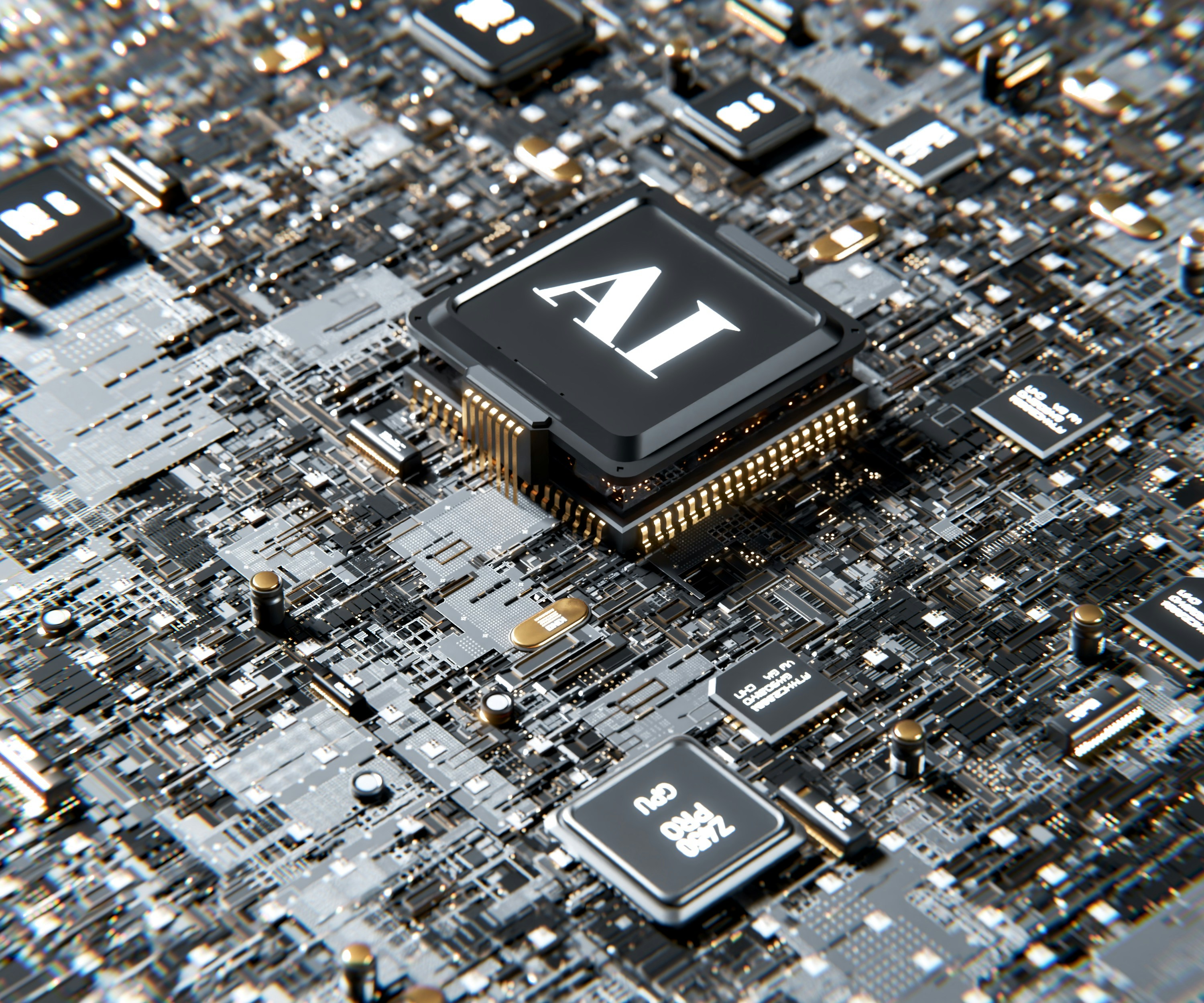
Artificial intelligence has changed the way people search for information, create content, write code, analyze data, and communicate online. At the center of this transformation are AI chatbot models—advanced AI systems designed to understand human language and generate useful responses.
From answering simple questions to helping developers build applications, modern AI chatbots have become powerful productivity tools. But not every chatbot uses the same underlying model, and different AI models are designed for different tasks.
In this guide, we'll explain what AI chatbot models are, how they work, the major types of AI chatbot models, their advantages and limitations, and how to choose the right model for your needs.
What Are AI Chatbot Models?
AI chatbot models are artificial intelligence models trained to understand and generate human-like text. They process a user's prompt and predict an appropriate response based on patterns learned from large amounts of data.
Most modern AI chatbots are powered by large language models (LLMs). These models can perform tasks such as:
-
Answering questions
-
Summarizing documents
-
Writing articles and emails
-
Generating and explaining code
-
Translating languages
-
Brainstorming ideas
-
Analyzing information
-
Creating structured content
Popular AI chatbot systems include ChatGPT, Google Gemini, Microsoft Copilot, Claude, and other AI assistants built on large language models.
How Do AI Chatbot Models Work?
Modern AI chatbot models generally use neural networks based on the Transformer architecture.
The basic process looks like this:
User prompt → Tokenization → AI model processing → Response generation
When you send a message, the system breaks the text into smaller units called tokens. The AI model processes those tokens and uses its learned patterns to determine what response is most appropriate.
The model generates the response one token at a time. More advanced systems may also use additional tools, such as web search, code execution, databases, or external APIs, to provide more useful answers.
Main Types of AI Chatbot Models
There isn't one AI model that is perfect for every task. AI chatbot models can be broadly categorized according to their capabilities and intended use.
1. General-Purpose AI Chatbot Models
General-purpose models are designed to handle a wide range of tasks.
They can help users with:
-
Research
-
Writing
-
Programming
-
Education
-
Brainstorming
-
Data analysis
-
Everyday questions
These models are useful for people who want one AI assistant that can handle many different types of work.
2. Coding AI Models
Coding-focused AI models are optimized for software development.
They can help developers:
-
Generate code
-
Debug errors
-
Explain programming concepts
-
Refactor existing code
-
Write tests
-
Generate documentation
-
Understand unfamiliar codebases
Developers can use these models inside coding environments or through AI-powered development tools.
3. Reasoning AI Models
Reasoning models are designed to spend more computational effort working through complex problems before producing an answer.
They can be particularly useful for:
-
Mathematics
-
Logic
-
Complex programming
-
Data analysis
-
Planning
-
Multi-step problem solving
The trade-off is that reasoning-focused systems can sometimes take longer or consume more resources than models optimized for simple conversational tasks.
4. Multimodal AI Models
Multimodal AI models can work with more than just text.
Depending on the system, they may understand:
-
Images
-
Text
-
Audio
-
Video
-
Documents
For example, a user may upload a chart and ask the AI to explain the trends, or provide a screenshot of an error and ask for troubleshooting help.
5. Small and Local AI Models
Not every AI model needs to run entirely in the cloud.
Smaller language models can sometimes run locally on computers, servers, or specialized hardware. These models can be useful when organizations need:
-
Greater privacy
-
Offline processing
-
Lower inference costs
-
Customization
-
Control over infrastructure
However, smaller models may have less capability than the largest cloud-based models, particularly on complex tasks.
Popular AI Chatbot Models
The AI chatbot market includes models developed by several major technology companies and AI research organizations.
OpenAI Models
OpenAI develops large language models that power ChatGPT and other AI applications. Its models are used for writing, coding, reasoning, analysis, and multimodal applications.
Google Gemini Models
Google's Gemini family is designed for multimodal AI applications and is integrated across Google's AI ecosystem. Gemini models can handle tasks involving text, images, code, and other forms of information.
Anthropic Claude Models
Claude is developed by Anthropic and is known for applications involving writing, analysis, coding, and working with large amounts of text.
Meta Llama Models
Meta's Llama family includes openly available model weights that developers can use to build and customize AI applications, subject to the applicable license terms.
Mistral AI Models
Mistral develops a range of language models, including models designed for efficient deployment and enterprise applications.
The "best" model depends heavily on the specific task, required performance, cost, speed, privacy requirements, and available tools.
AI Chatbot Models vs AI Chatbot Applications
One important distinction is the difference between an AI model and an AI chatbot application.
An AI model is the underlying technology that processes information and generates responses.
An AI chatbot application is the product or interface that allows users to interact with that model.
For example:
AI model → Application → User
A single AI model can potentially power multiple applications, while an AI chatbot application may also combine an AI model with search, databases, file processing, APIs, and other tools.
Benefits of AI Chatbot Models
AI chatbot models provide several advantages for individuals and organizations.
Increased Productivity
AI can automate repetitive tasks and help users complete work faster. Writing drafts, summarizing information, generating reports, and explaining code are examples of tasks where AI can save time.
24/7 Availability
Unlike human support teams, AI chatbots can operate continuously and respond to users at any time.
Personalized Assistance
AI chatbots can adapt responses based on the user's prompt and, in some applications, information provided during the conversation.
Programming Assistance
Developers can use AI models as coding assistants for generating, reviewing, explaining, and debugging software.
Business Automation
Companies can integrate AI chatbots with customer support systems, knowledge bases, CRM platforms, and internal tools.
Limitations of AI Chatbot Models
Despite their capabilities, AI chatbot models are not perfect.
AI Can Generate Incorrect Information
AI models can produce convincing but incorrect answers. This is often referred to as an AI hallucination.
Important information should therefore be verified using reliable sources.
Knowledge May Be Limited
Depending on the model and its tools, an AI system may not automatically know about the latest events or information.
Models connected to real-time search or external databases can provide more current information.
Privacy Concerns
Users should be careful when entering confidential business information, passwords, financial information, personal data, or other sensitive material into an AI system.
Cost
Advanced AI models can be expensive to operate at scale, particularly for businesses processing large volumes of requests.
How to Choose the Best AI Chatbot Model
Choosing an AI chatbot model should depend on your specific requirements rather than popularity alone.
Consider these factors:
| Factor | What to Consider |
|---|---|
| Accuracy | How reliable are the responses? |
| Reasoning | Can the model solve complex problems? |
| Speed | How quickly does it respond? |
| Cost | What does API or usage access cost? |
| Context window | How much information can it process at once? |
| Multimodal support | Can it understand images, audio, or video? |
| Coding | How strong is it at programming tasks? |
| Privacy | How is user data handled? |
| Integration | Can it connect with your existing tools? |
| Deployment | Can it run locally or only through an API/cloud service? |
For everyday questions, a fast general-purpose model may be enough. Developers may prefer a model with strong coding capabilities, while businesses may prioritize privacy, integrations, reliability, and cost.
The Future of AI Chatbot Models
AI chatbot models are moving beyond simple question-and-answer systems.
Future AI assistants are increasingly expected to perform multiple steps, use external tools, work with different types of data, and complete tasks with less human intervention.
This evolution is leading toward AI agents that can potentially:
-
Understand a user's goal
-
Create a plan
-
Use external tools
-
Retrieve information
-
Perform actions
-
Evaluate the results
-
Adjust their approach when necessary
As models become more capable, the difference between a chatbot, AI assistant, and AI agent is likely to become increasingly important.
Frequently Asked Questions About AI Chatbot Models
What is the best AI chatbot model?
There is no single best AI chatbot model for everyone. The right choice depends on whether you prioritize writing, coding, reasoning, speed, cost, privacy, or multimodal capabilities.
Are AI chatbot models free?
Some AI chatbot services offer free access with usage limitations, while advanced models and APIs may require paid plans.
What is the difference between an AI chatbot and an LLM?
An LLM is the underlying language model, while an AI chatbot is an application that uses an AI model to communicate with users.
Can AI chatbot models write code?
Yes. Many modern AI models can generate, explain, debug, refactor, and review code across multiple programming languages.
Can AI chatbots replace humans?
AI can automate many repetitive tasks, but it does not eliminate the need for human judgment. Human expertise remains important for decision-making, verification, creativity, accountability, and complex situations.
Final Thoughts
AI chatbot models have become an important part of modern technology. They can assist with writing, programming, research, analysis, customer service, education, and many other tasks.
However, choosing an AI chatbot should not be based solely on which model is the most popular. Performance, cost, speed, privacy, reasoning ability, integrations, and the specific task all matter.
As AI models continue to improve, chatbots are likely to evolve from systems that simply answer questions into intelligent assistants capable of completing complex, multi-step tasks.



Discussion & Comments
0Join the conversation
Sign in to your StepsPoint account to share your perspectives, ask questions, and interact with the community.
No comments yet
Be the first to share your thoughts and join the conversation on this post!